影片详情
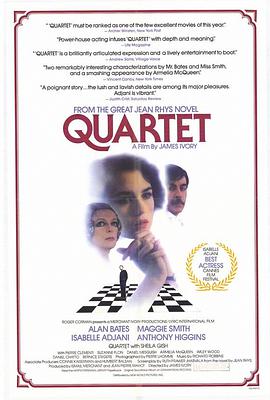
四重奏
It has been said that most great twentieth century novels include scenes in a hotel, a symptom of the vast uprooting that has occurred in the last
- 导演
- 詹姆斯·伊沃里
- 主演
- 阿兰·贝茨,玛吉·史密斯,伊莎贝尔·阿佳妮,安东尼·希金斯
播放地址
《四重奏》选集
lzm3u8
liangzi
剧情资料
剧情简介
《四重奏》剧情介绍
《四重奏》 It has been said that most great twentieth century novels include scenes in a hotel, a symptom of the vast uprooting that has occurred in the last century: James Ivory begins Quartet with a montage of the hotels of Montparnasse, a quiet prelude before our introduction to the violently lost souls who inhabit them.
Adapted from the 1928 autobiographical novel by Jean Rhys, Quartet is the story of a love quadrangle between a complicated young West Indian woman named Marya (played by Isabelle Adjani), her husband Stefan (Anthony Higgins), a manipulative English art patron named Heidler (Alan Bates), and his painter wife Lois (Maggie Smith). The film is set in the Golden Age of Paris, Hemingway's "moveable feast" of cafe culture and extravagant nightlife, glitter and literati: yet underneath is the outline of something sinister beneath the polished brasses and brasseries.
When Marya's husband is put in a Paris prison on charges of selling stolen art works, she is left indigent and is taken in by Heidler and his wife: the predatory Englishman (whose character Rhys bases on the novelist Ford Madox Ford) is quick to take advantage of the new living arrangement, and Marya finds herself in a stranglehold between husband and wife. Lovers alternately gravitate toward and are repelled by each other, now professing their love, now confessing their brutal indifference -- all the while keeping up appearances. The film explores the vast territory between the "nice" and the "good," between outward refinement and inner darkness: after one violent episode, Lois asks Marya not to speak of it to the Paris crowd. "Is that all you're worried about?" demands an outraged Marya. "Yes," Lois replies with icy candor, "as a matter of fact."
Adjani won the Best Actress award at Cannes for her performances in Quartet: her Marya is a volatile compound of French schoolgirl and scorned mistress, veering between tremulous joy and hysterical outburst. Smith shines in one of her most memorable roles: she imbues Lois with a Katherine-of-Aragon impotent rage, as humiliated as she is powerless in the face of her husband's choices. Her interactions with Bates are scenes from a marriage that has moved from disillusionment to pale acceptance.
Ruth Prawer Jhabvala and James Ivory's screenplay uses Rhys's novel as a foundation from which it constructs a world that is both true to the novel and distinctive in its own right, painting a society that has lost its inhibitions and inadvertently lost its soul. We are taken to mirrored cafes, then move through the looking glass: Marya, in one scene, is offered a job as a model and then finds herself in a sadomasochistic pornographer's studio. The film, as photographed by Pierre Lhomme, creates thoroughly cinematic moments that Rhy's novel could not have attempted: in one of the Ivory's most memorable scenes, a black American chanteuse (extraordinarily played by Armelia McQueen) entertains Parisian patrons with a big and brassy jazz song, neither subtle nor elegant. Ivory keeps the camera on the singer's act: there is something in her unguarded smile that makes the danger beneath Montparnasse manners seem more acute. 本页同步整理《四重奏》高清播放地址、剧情简介、演员资料和更新时间,方便观众快速了解影片内容。
一、《四重奏》是什么类型的影视作品?
《四重奏》属于爱情片类型,1981年在法国地区推出,适合喜欢爱情片题材的观众观看。
二、《四重奏》导演和主演是谁?
《四重奏》由詹姆斯·伊沃里执导,阿兰·贝茨,玛吉·史密斯,伊莎贝尔·阿佳妮,安东尼·希金斯等演员主演。影片在人物塑造、场景调度和情节推进上保持了较完整的类型表达,主演阵容也让故事更具辨识度。
三、《四重奏》有哪些看点?
《四重奏》的看点集中在剧情节奏、人物关系、情绪变化和爱情片元素上。影片通过冲突、选择和转折推动故事发展,让观众可以在观看过程中持续获得代入感。
四、《四重奏》适合哪些观众观看?
如果你喜欢法国地区的爱情片作品,或者关注阿兰·贝茨,玛吉·史密斯,伊莎贝尔·阿佳妮,安东尼·希金斯相关影片,那么《四重奏》会是一个值得加入片单的选择。页面还整理了影片年份、地区、演员表和播放线路,方便快速判断是否符合观影口味。
五、《四重奏》在哪里可以在线观看?
青青草视频(henghengw.cn)提供《四重奏》在线播放入口,并整理播放线路、选集列表和影片资料。
六、《四重奏》完整资料
《四重奏》是一部爱情片作品,导演:詹姆斯·伊沃里,主演:阿兰·贝茨,玛吉·史密斯,伊莎贝尔·阿佳妮,安东尼·希金斯。本页内容包含《四重奏》剧情介绍、演员表、上映年份、地区信息、更新时间和高清播放地址,方便用户了解影片并继续在线观看。
《四重奏》 It has been said that most great twentieth century novels include scenes in a hotel, a symptom of the vast uprooting that has occurred in the last century: James Ivory begins Quartet with a montage of the hotels of Montparnasse, a quiet prelude before our introduction to the violently lost souls who inhabit them.
Adapted from the 1928 autobiographical novel by Jean Rhys, Quartet is the story of a love quadrangle between a complicated young West Indian woman named Marya (played by Isabelle Adjani), her husband Stefan (Anthony Higgins), a manipulative English art patron named Heidler (Alan Bates), and his painter wife Lois (Maggie Smith). The film is set in the Golden Age of Paris, Hemingway's "moveable feast" of cafe culture and extravagant nightlife, glitter and literati: yet underneath is the outline of something sinister beneath the polished brasses and brasseries.
When Marya's husband is put in a Paris prison on charges of selling stolen art works, she is left indigent and is taken in by Heidler and his wife: the predatory Englishman (whose character Rhys bases on the novelist Ford Madox Ford) is quick to take advantage of the new living arrangement, and Marya finds herself in a stranglehold between husband and wife. Lovers alternately gravitate toward and are repelled by each other, now professing their love, now confessing their brutal indifference -- all the while keeping up appearances. The film explores the vast territory between the "nice" and the "good," between outward refinement and inner darkness: after one violent episode, Lois asks Marya not to speak of it to the Paris crowd. "Is that all you're worried about?" demands an outraged Marya. "Yes," Lois replies with icy candor, "as a matter of fact."
Adjani won the Best Actress award at Cannes for her performances in Quartet: her Marya is a volatile compound of French schoolgirl and scorned mistress, veering between tremulous joy and hysterical outburst. Smith shines in one of her most memorable roles: she imbues Lois with a Katherine-of-Aragon impotent rage, as humiliated as she is powerless in the face of her husband's choices. Her interactions with Bates are scenes from a marriage that has moved from disillusionment to pale acceptance.
Ruth Prawer Jhabvala and James Ivory's screenplay uses Rhys's novel as a foundation from which it constructs a world that is both true to the novel and distinctive in its own right, painting a society that has lost its inhibitions and inadvertently lost its soul. We are taken to mirrored cafes, then move through the looking glass: Marya, in one scene, is offered a job as a model and then finds herself in a sadomasochistic pornographer's studio. The film, as photographed by Pierre Lhomme, creates thoroughly cinematic moments that Rhy's novel could not have attempted: in one of the Ivory's most memorable scenes, a black American chanteuse (extraordinarily played by Armelia McQueen) entertains Parisian patrons with a big and brassy jazz song, neither subtle nor elegant. Ivory keeps the camera on the singer's act: there is something in her unguarded smile that makes the danger beneath Montparnasse manners seem more acute.